💰 The Income Generators (High Probability, Cash Flow)
GILD: Bullish Put Spread capitalizing on an attractive valuation discount and defensive capital rotation potential despite near-term pipeline skepticism.
🚀 The Growth Seekers (Higher Risk, Max Reward)
(No trades in this category today)
🛡️ The Portfolio Protectors (Hedges & Bearish Bets)
PYPL: Bearish Put Spread capitalizing on a bearish trend following signal amid intensifying competition and active user growth concerns in the digital payments space.
APO: Bearish Call Spread acting as a tactical hedge against accelerating private credit defaults and rising fund redemption pressures.
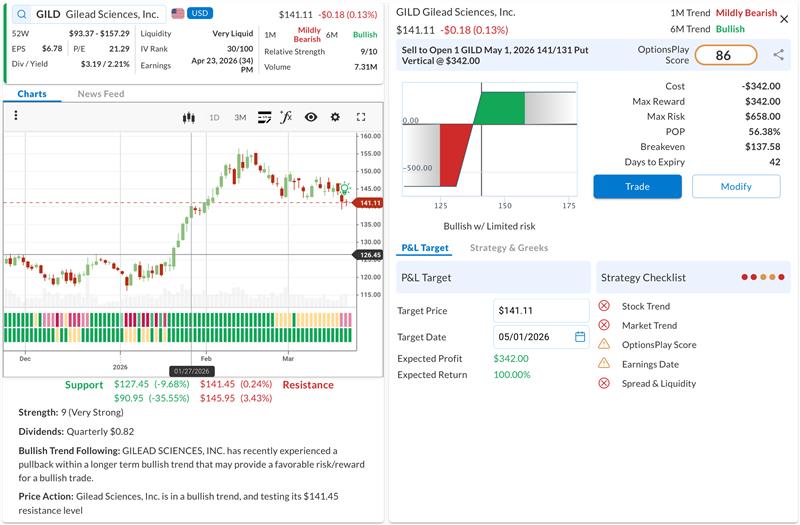
1. GILD ($141.11) – The Valuation Disconnect
We’re betting on: If defensive capital rotation materializes and GILD’s deeply discounted valuation triggers multiple expansion, the stock will hold its ground above our $141 strike, allowing the short put spread to expire worthless for full profit.
The Trade: Sell to Open the GILD May 1, 2026 141/131 Put Vertical @ $3.42 Credit.
🟢 BUY TO OPEN May 01, 2026 131 Put @ $2.73
🔴 SELL TO OPEN May 01, 2026 141 Put @ $6.15
Trade Metrics: POP: 56.39% | Collect $342.00 per contract vs. a Max Risk of $658.00 (1.9:1).
The Why: Trading at a severe discount to its industry average despite strong cash flow generation, Gilead presents a compelling multiple expansion setup as market skepticism regarding its HIV franchise maturity appears fully priced in.
The Technicals: GILD is experiencing a pullback within a longer-term Bullish Trend (6M) and is currently testing its $141 resistance level, with major structural support established lower at $127.
Management:
⚠️ Warning: Earnings is scheduled for Apr 23, which may require active management.
Stop Loss: Buy back the spread at $6.84 (100% of credit received).
Take Profit: Buy back the spread at $1.71 (50% of max gain).
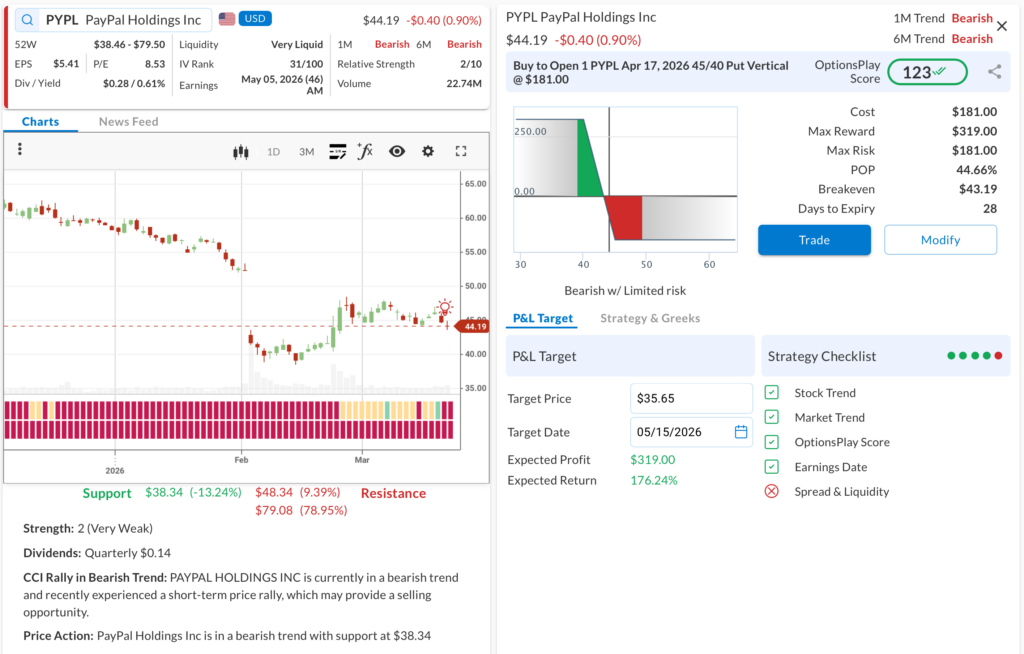
2. PYPL ($44.19) – Fading the Payments Rally
We’re betting on: If competitive pressures and slowing user growth continue to weigh on PayPal’s margins, this counter-trend rally will fail, driving the stock lower towards our $40 target for a substantial downside profit.
The Trade: Buy to Open the PYPL Apr 17, 2026 45/40 Put Vertical @ $1.81 Debit.
🔴 SELL TO OPEN Apr 17, 2026 40 Put @ $0.59
🟢 BUY TO OPEN Apr 17, 2026 45 Put @ $2.40
Trade Metrics: POP: 44.66% | Pay $181.00 per contract vs. a Max Reward of $319.00 (1.8:1).
The Why: PayPal faces a challenging fundamental landscape marked by intensifying competition from tech giants and fintech disruptors, leading to sluggish active account growth and sustained pressure on transaction margins.
The Technicals: Mired in a confirmed Bearish Trend (1M & 6M) with Very Weak Relative Strength (2/10), the stock recently triggered a bearish trend following signal after a short-term CCI rally, presenting a compelling selling opportunity below its $48 resistance level, targeting support at $38.
Management:
Stop Loss: Sell the spread at $0.91 (50% loss on premium).
Take Profit: Sell the spread at $3.17 (75% gain on premium).
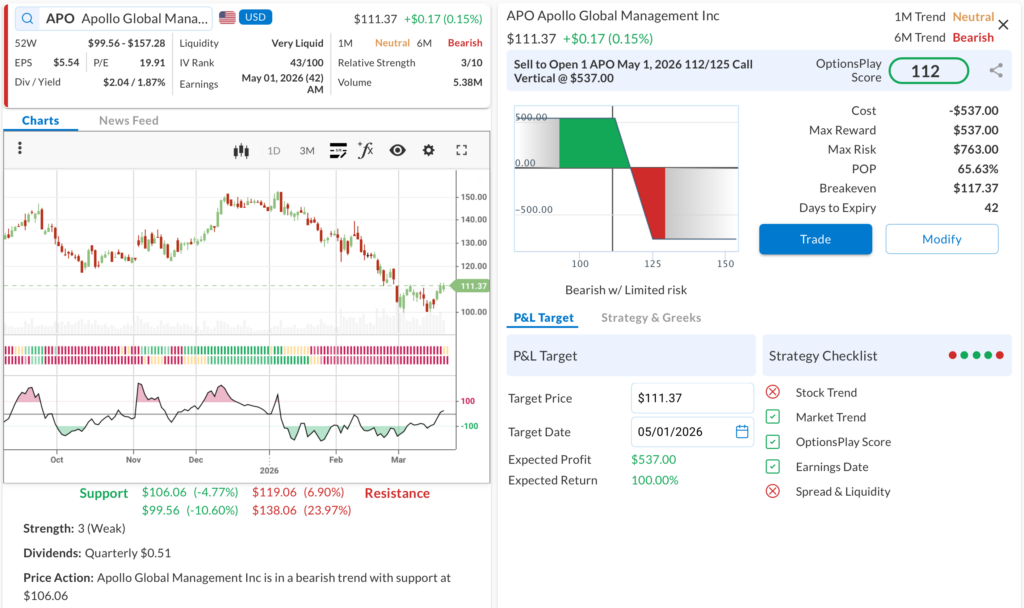
3. APO ($111.37) – The Private Credit Contagion
We’re betting on: If accelerating private credit defaults and rising redemption requests continue to pressure alternative asset managers, APO will struggle to break above our $112 strike, securing max profit for this bearish spread.
The Trade: Sell to Open the APO May 1, 2026 112/125 Call Vertical @ $5.37 Credit.
🔴 SELL TO OPEN May 01, 2026 112 Call @ $7.70
🟢 BUY TO OPEN May 01, 2026 125 Call @ $2.33
Trade Metrics: POP: 65.63% | Collect $537.00 per contract vs. a Max Risk of $763.00 (1.4:1).
The Why: With private credit defaults accelerating and alternative asset managers facing record redemption requests, Apollo’s exposure to opaque lending markets creates significant fundamental headwinds that cap near-term upside.
The Technicals: Displaying Weak Relative Strength (3/10) within a longer-term Bearish trend (6M), the stock is currently consolidating near its $106 support with stiff overhead resistance approaching at $119.
Management:
⚠️ Warning: Earnings is scheduled for May 01, which coincides with expiration and may require active management.
Stop Loss: Buy back the spread at $10.74 (100% of credit received).
Take Profit: Buy back the spread at $2.69 (50% of max gain).








Share this on