OptionsPlay DailyPlay Ideas Menu – April 23rd, 2026
💰 The Income Generators (High Probability, Cash...
Read More
Today was a modest reset, not a regime shift. The S&P 500 closed at 7,108 and the Nasdaq at 24,439—the first red day since Monday, pulling back from Wednesday’s records. The tape made clear why: a concentrated software rout led by ServiceNow’s worst day on record, punctuated by IBM, a second Tesla leg lower, and the first genuinely uncomfortable PMI print of the year. This reads as sector-specific stress layered on top of live geopolitics, not the start of a broader correction. My framing remains constructive but hedged. Intel’s after-hours blowout—with Data Center and AI revenue up 22% year-over-year and a clean Q2 raise—validates that the earnings-led bull is alive, but highly selective. The market is willing to pay up for monetization evidence when a company actually delivers it.
The bigger message sits in the pattern. Roughly 81% of S&P 500 reporters are beating this quarter, yet names that beat without raising are being sold aggressively. ServiceNow beat and faded on explicit Iran-linked subscription headwinds; IBM and Tesla did the same on weak outlooks or massive capex raises. This is a “beat-and-fade” regime. The market is no longer accepting “good quarter, same outlook” to chase prices to records; it demands forward confirmation.
Looking to the Mag 4 next Tuesday, the bar remains unchanged: monetization is the test. We know Alphabet’s $175-$185B capex figure, but Cloud growth needs to clear 50%. Microsoft needs Azure constant-currency in the high 30s. Amazon needs AWS above 20%. Meta needs revenue growth to hold 32%. If they deliver, the software rout stays quarantined. If two or more miss on the forward outlook, the April rally will be severely tested. I want monetization evidence, and I am expressing that view through defined-risk options rather than outright directional bets.
On the macro side, stagflation is now in the tape. PMIs flagged manufacturing input costs at a 10-month high against slowing services, arriving exactly as Brent settles near $104 for its sixth straight session. With President Trump publicly ordering the Navy to destroy Iranian mine-laying vessels and declaring Hormuz “sealed up tight,” oil pass-through risk is materializing. Wednesday’s FOMC decision is the first real test of whether Chair Powell leans against the softer services read or holds the line against hotter input costs.
My Playbook: I am keeping the energy book on as an explicit hedge. I’m maintaining small-cap positioning at cheap 16x forward multiples with 17% consensus growth, leaning into semis over software after Intel, and running defined-risk options through Mag 4 and the FOMC. This tape still rewards staying engaged—it just demands doing it with hedges.
💰 The Income Generators (High Probability, Cash Flow)
🚀 The Growth Seekers (Higher Risk, Max Reward)
🛡️ The Portfolio Protectors (Hedges & Bearish Bets)
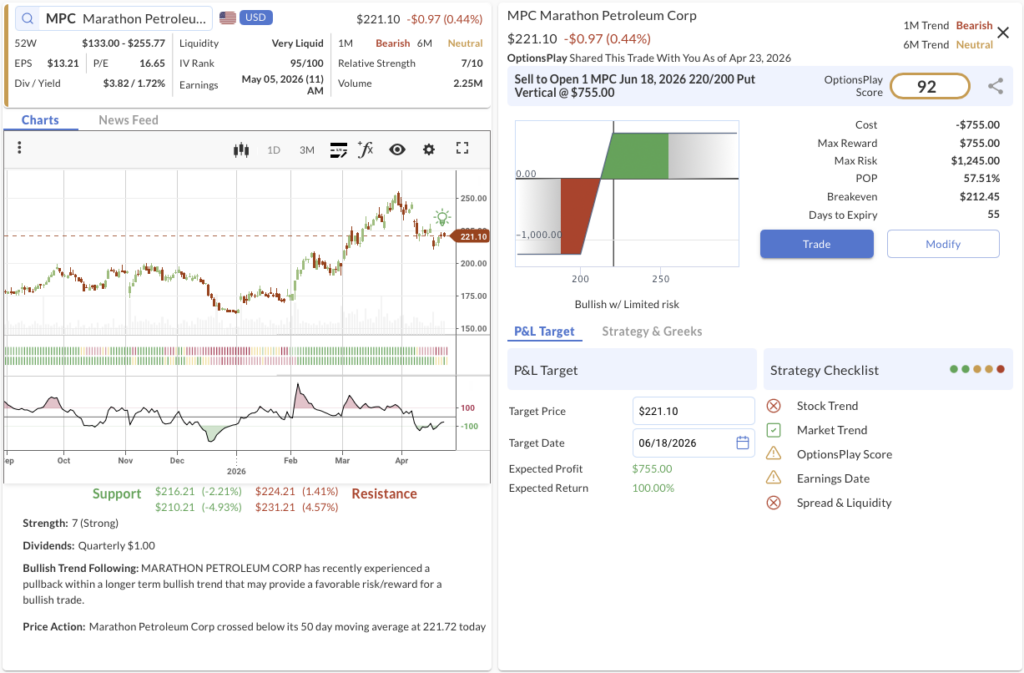
1. MPC ($221.10) – Hedging with the Refiners

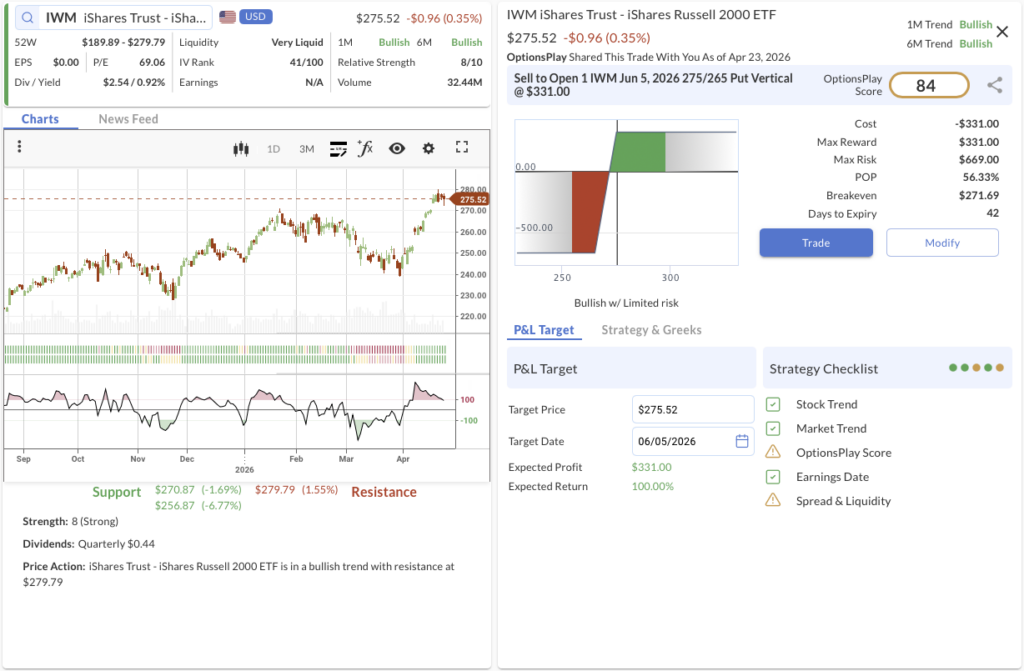
2. IWM ($275.52) – The Broadening Rotation

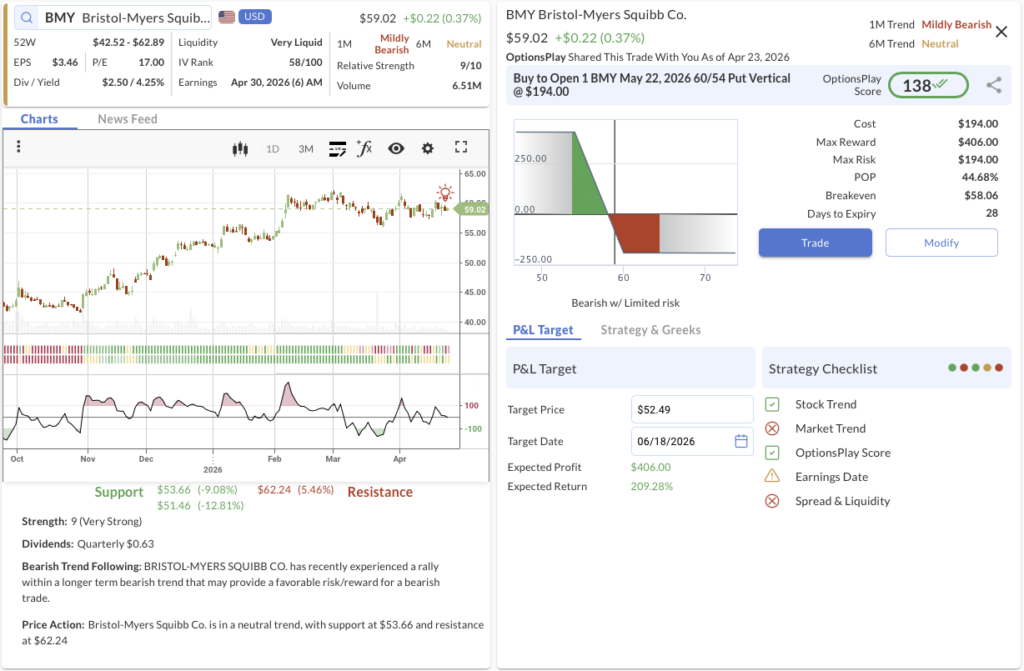
3. BMY ($59.02) – Fading the Pharma Flow


💰 The Income Generators (High Probability, Cash...
Read More💰 The Income Generators (High Probability, Cash...
Read MoreStrategies Corner: Geopolitical Whiplash & The Tech...
Read MoreStrategies Corner: Geopolitical Whiplash & The Tech...
Read More


Share this on